Best Korean Sunscreens Without White Cast (2026 Guide)
Best Korean Sunscreens Without White Cast (2026)
White cast — the pale film left by some mineral sunscreens, particularly on deeper skin tones — is a common reason people skip or under-apply sunscreen. This matters, because chronic UV exposure is the dominant driver of visible skin aging: work by Flament and colleagues attributes roughly 80% of visible facial aging to sun exposure [3]. Many Korean chemical UV filters and their formulations reduce the white-cast problem noticeably compared with typical mineral SPF.
Why Korean Sunscreens Cast Less White
UV filter choice: Many Korean brands use next-generation organic filters such as Tinosorb S, Tinosorb M, and Uvinul A Plus that provide broad-spectrum protection with little to no white residue. These newer filters are approved in the EU, UK, Canada, Australia, and much of Asia but are not yet on the FDA's list of approved sunscreen actives for products made in the US — which is part of why Korean-import sunscreens are so sought after in North America [2]. (The FDA has recently proposed adding bemotrizinol/Tinosorb S, but as of 2026 it is not yet a finalized US-approved active.)
Water content: Korean "water-essence" formats use higher water content, so they absorb like a serum and leave little visible film.
Formulation focus: Korean cosmetic chemists have spent years refining the texture of daily SPF, and that engineering shows in the finish.
Best by Skin Tone and Concern
For All Skin Tones (Watery, No Trace)
Biore UV Aqua Rich Watery Essence SPF 50+ (~$10–14) — Absorbs in seconds with minimal white cast, suitable across skin tones, and uses modern filters. It is not strongly water-resistant, so reapply after swimming or heavy sweating.
For Deeper Skin Tones
Beauty of Joseon Relief Sun: Rice + Probiotics SPF 50+ PA++++ (~$15) — Slightly tinted, absorbs well, and includes skin-conditioning ingredients (rice extract, probiotics). Widely reported to avoid white cast on medium-to-deep skin tones and one of the most-recommended sunscreens globally for deeper complexions.
For Oily/Acne-Prone Skin
SKIN1004 Madagascar Centella Hyalu-Cica Water-Fit Sun Serum SPF 50+ (~$18) — Gel texture with a matte-leaning finish and centella asiatica, a well-studied soothing botanical [4]. A good fit for oil-prone skin with minimal residue.
For Dry Skin
d'Alba Italian White Truffle Sunscreen SPF 50+ (~$30) — Hydrating with a slightly dewy finish; suits dry and mature skin that wants a more moisturizing SPF.
For Under Makeup
Etude Sunprise Mild Airy Finish SPF 50+ PA++++ (~$12) — Dries to a soft, near-powder finish that works well as a makeup base.
For Reapplication Over Makeup
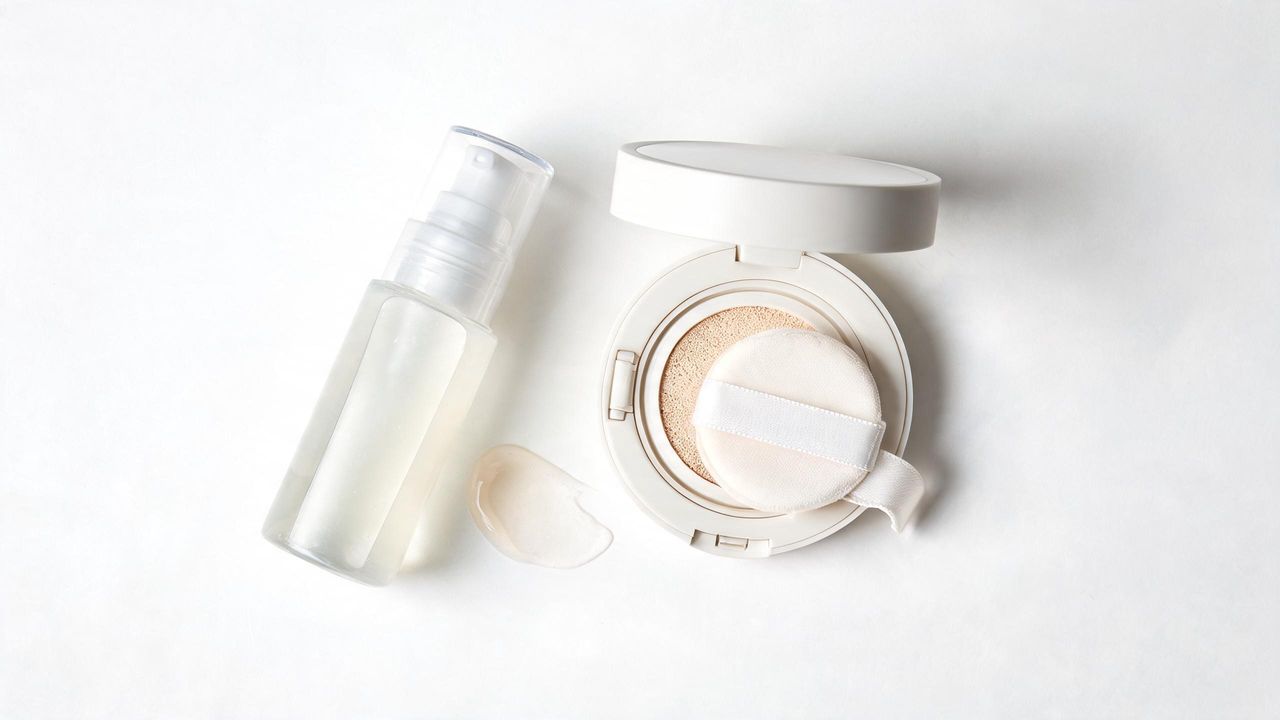
Cushion or stick SPF (e.g., Purito, A'pieu) — Any well-formulated cushion or stick SPF makes tap-on reapplication over makeup practical.
Application for Minimal White Cast
- Apply after moisturizer, allowing a couple of minutes to absorb
- Dispense onto fingertips or the back of your hand rather than directly onto the face
- Apply in thin layers — one layer, pat in, then add a second if coverage feels light
- Press and pat rather than aggressively rubbing, which preserves the formula's finish
Use enough product: the AAD recommends applying generously and reapplying about every two hours or after swimming/sweating, because under-application sharply reduces the protection you actually get [1].
Bottom Line
Korean sunscreens largely solve the white-cast problem through modern UV filter selection and elegant formulation. Beauty of Joseon and Biore are the two best starting points. The bigger real-world issue is quantity and reapplication — most people apply far less than the tested amount, so aim for the two-finger rule and top up during the day with a cushion or stick.
This article reflects current dermatological consensus and is not a substitute for personalized advice from a licensed dermatologist.