Centella Asiatica (Cica): The Soothing Ingredient Behind K-Beauty's Calm-Skin Trend
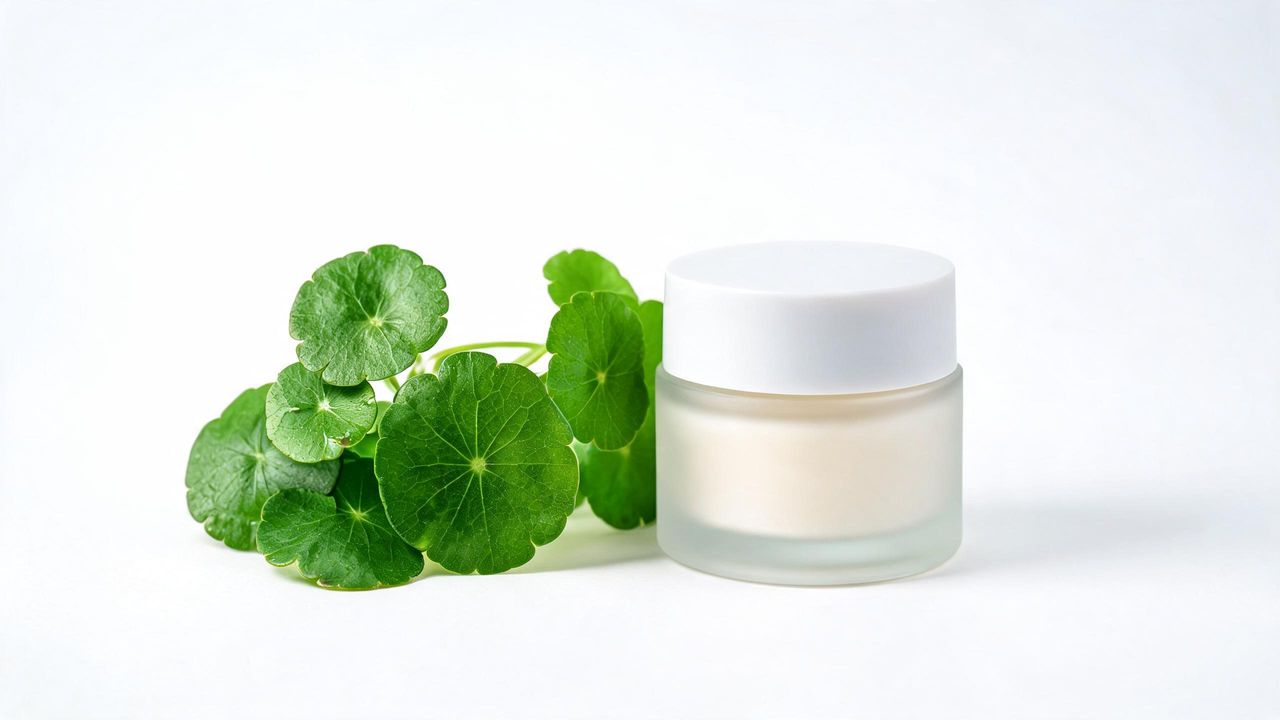
Centella Asiatica (Cica): The Soothing Ingredient Behind K-Beauty's Calm-Skin Trend
Centella asiatica — also known as gotu kola, tiger grass, or "cica" — is one of the more clinically studied plant extracts in skincare. Its benefits aren't only marketing claims; several are supported by pharmaceutical research, as it was used in wound healing long before it appeared in moisturizers [1].
What Centella Asiatica Contains
The commonly cited active compounds in centella:
- Madecassic acid — associated with collagen synthesis and anti-inflammatory activity
- Asiatic acid — associated with collagen synthesis and antioxidant activity
- Asiaticoside — studied for promoting wound healing and reducing inflammation
- Madecassoside — anti-inflammatory, studied for supporting skin regeneration
Together these compounds make centella one of the few botanicals with reasonably solid research backing for several skin benefits [1].
What It Actually Does
Anti-inflammatory: Centella extracts have been shown to modulate inflammatory pathways. For irritated, reactive, or redness-prone skin, this is clinically meaningful — not just "soothing" [1].
Wound healing and repair: Centella-derived compounds are used in pharmaceutical-grade preparations (such as Madecassol in Korea and centella-based creams elsewhere) because the asiaticoside content is associated with fibroblast activity and collagen synthesis [1].
Barrier support: Some evidence suggests centella supports the skin barrier, which can mean less sensitivity and better moisture retention over time [1][2].
Collagen stimulation: The madecassic and asiatic acid content is linked to collagen production in laboratory and clinical settings — though the effect from cosmetic-strength formulations is generally milder than from pharmaceutical concentrations [1].
Which Skin Types Benefit Most
- Sensitive / reactive skin — the primary use case; the anti-inflammatory effect can reduce reactivity
- Post-acne or recovering skin — supports healing
- Dry, compromised-barrier skin — the barrier-supporting effect helps recovery
- Redness-prone skin — some evidence supports a reduction in visible redness
Normal or oily skin with no specific concerns: centella products are safe and beneficial, but not a priority.
Cica vs. Madecassoside: What's the Difference on Labels?
Full centella extract contains the range of active compounds. Madecassoside is one isolated compound — more expensive to produce and offering a higher concentration of that single active. Both are effective; whole centella extract has the broadest effect profile [1].
Recommended Korean Cica Products
- Dr. Jart+ Cicapair Tiger Grass Cream — a rich formula for dry or sensitive skin
- COSRX Centella Blemish Ampule — targeted treatment for blemishes and post-inflammatory marks
- Some By Mi Centella toner, serum, and cream — an affordable entry point
- Klairs Midnight Blue Calming Cream — combines centella with guaiazulene for reactive skin
For redness and evenness, centella pairs well with niacinamide, another well-tolerated, evidence-supported ingredient [3].
Bottom Line
Centella asiatica is one of K-beauty's more legitimate ingredients. Its anti-inflammatory, barrier-supporting, and wound-healing properties are backed by research — not just beauty marketing. If you have sensitive, reactive, or recovering skin, a centella product is a reasonable addition to your routine.
This article reflects current dermatological consensus and is not a substitute for personalized advice from a licensed dermatologist.