Glass Skin Makeup: How to Get the Dewy Korean Base Look
Glass Skin Makeup: The Step-by-Step Korean Technique
"Glass skin makeup" is slightly misleading — the look is roughly 80% skincare and 20% makeup. A dewy, luminous finish can't be built on top of dehydrated skin with a heavy matte foundation. The Korean approach starts from the inside out, because well-hydrated skin with an intact barrier reflects light more evenly and looks plumper and smoother [1][2].
Here's the complete technique — skincare prep included.
Step 1: Skincare Prep (The Foundation of the Look)
Glass skin makeup only works on well-hydrated, prepped skin. Start with:
- Double cleanse — clean skin is essential; no product layers from the day before
- Hydrating toner — pat in 2–3 layers for maximum hydration
- Hyaluronic acid or polyglutamic acid serum — apply to damp skin, where humectants draw and hold water most effectively [1]
- Lightweight gel moisturizer — seal the hydration; wait 3–5 minutes before applying any base
Critical: Let your skincare absorb fully. Glass skin makeup applied over tacky skincare will pill or look textured.
Step 2: Primer — Dew, Not Blur
Avoid mattifying or pore-filling primers for this look. Use:
- A hydrating or illuminating primer (luminous finish, not blurring)
- Or skip primer entirely if your moisturizer provides a good base
Korean options: BBIA Last Foundation Primer (hydrating), Milani Luminoso Primer.
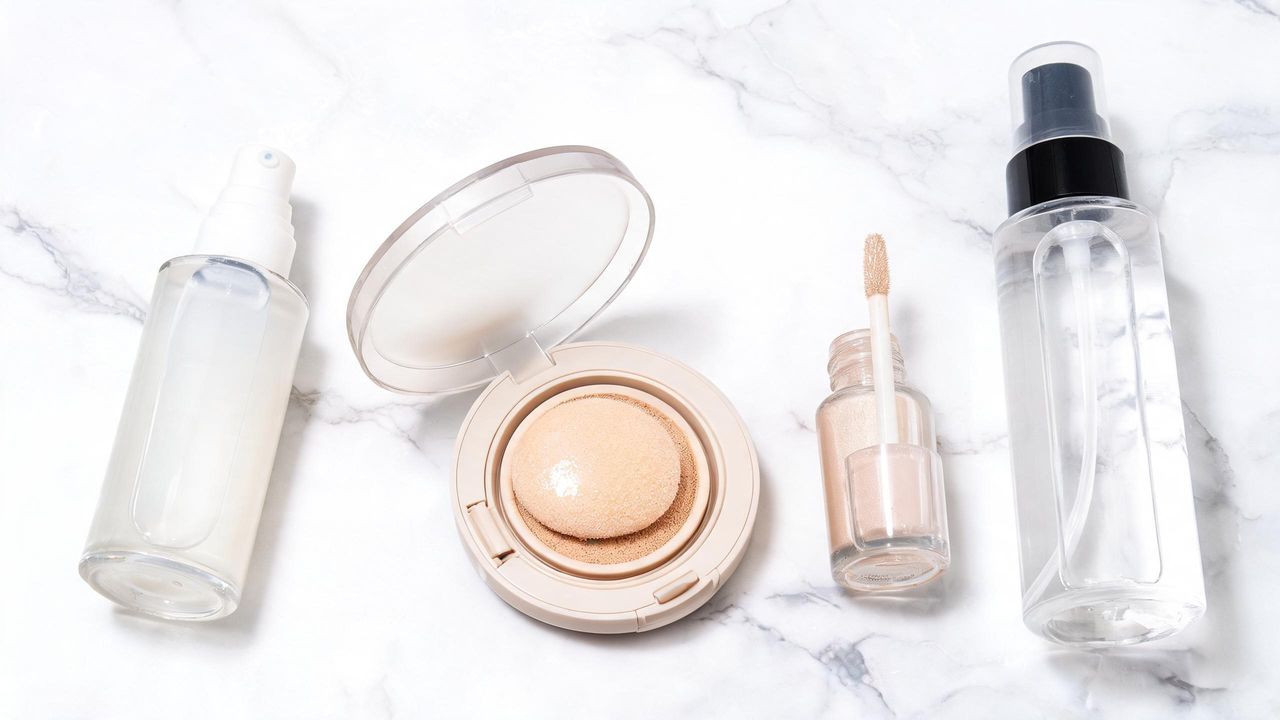
Step 3: Skin Tint or Cushion Foundation
Skip heavy full-coverage foundation. It sits on the skin surface, obscuring the natural light-reflection that creates the glass effect.
Use instead:
- Skin tint — very light coverage that lets skin texture show naturally
- Korean cushion foundation — buildable, dewy finish, often with SPF included
- CC cream — coverage plus brightening in one
Application: use fingertips for maximum warmth-activation and a natural finish. Blend in pressing motions, not sweeping strokes.
A note on SPF: many cushions and tints carry an SPF claim, but you generally apply far less product than the amount used in SPF testing, so a base product alone won't reliably deliver its labeled protection. Dermatologists recommend applying a dedicated broad-spectrum sunscreen first and treating any SPF in makeup as a bonus [3].
Step 4: Concealer (Minimal)
Spot-apply under the eyes and over any discoloration only. Choose a satin-finish concealer — matte will look flat. Blend with a damp sponge.
Step 5: Setting — Strategically
Glass skin does NOT mean no setting. It means strategic setting:
- Set the T-zone only (forehead, nose) with a very small amount of translucent setting powder
- Leave cheekbones, nose bridge, cupid's bow, and center of forehead bare — these are your highlight zones
- Avoid heavy powder under the eyes — it can settle into fine lines and look dull
Step 6: Highlighter
This is where the glass effect is amplified:
- Use a liquid or cream highlighter — powder highlighters can look glittery or overdone
- Apply to: tops of cheekbones, nose bridge, cupid's bow, and inner corners of the eyes
- Korean brands often favor subtle, cool-toned highlighters over bronzed champagne tones for this look
Step 7: Dewy Setting Spray
Finish with a hydrating setting spray (not a mattifying one). Korean favorites: BBIA Last Down Fixing Mist, or Make Up For Ever Mist & Fix.
Completing the Glass Skin Look: Eyes and Lips
Keep the rest of the face simple — glass skin makeup works because the skin is the feature:
- Eyes: Mascara only, or subtle brown shadow. No heavy eye looks.
- Lips: Clear gloss, sheer balm, or a tinted lip oil
- Blush: Apply lightly across the cheeks (the Korean flushed-cheek technique) in a soft peachy or rosy tone
Bottom Line
Glass skin makeup lives or dies on your skincare prep. Get your skin hydrated, use light-coverage products applied with fingertips, and set only what needs to be set. The rest — the natural luminosity — comes from well-hydrated skin that reflects light evenly.
This article reflects current dermatological consensus and is not a substitute for personalized advice from a licensed dermatologist.