Korean Facial Massage: 5 Techniques for Better Skin in 5 Minutes
Korean skincare routines go beyond product application — the technique of applying products matters as much as what's in them. Korean facial massage practices are built into routine steps: product is pressed, not rubbed; toner is patted, not swiped; eye cream is tapped, not dragged.
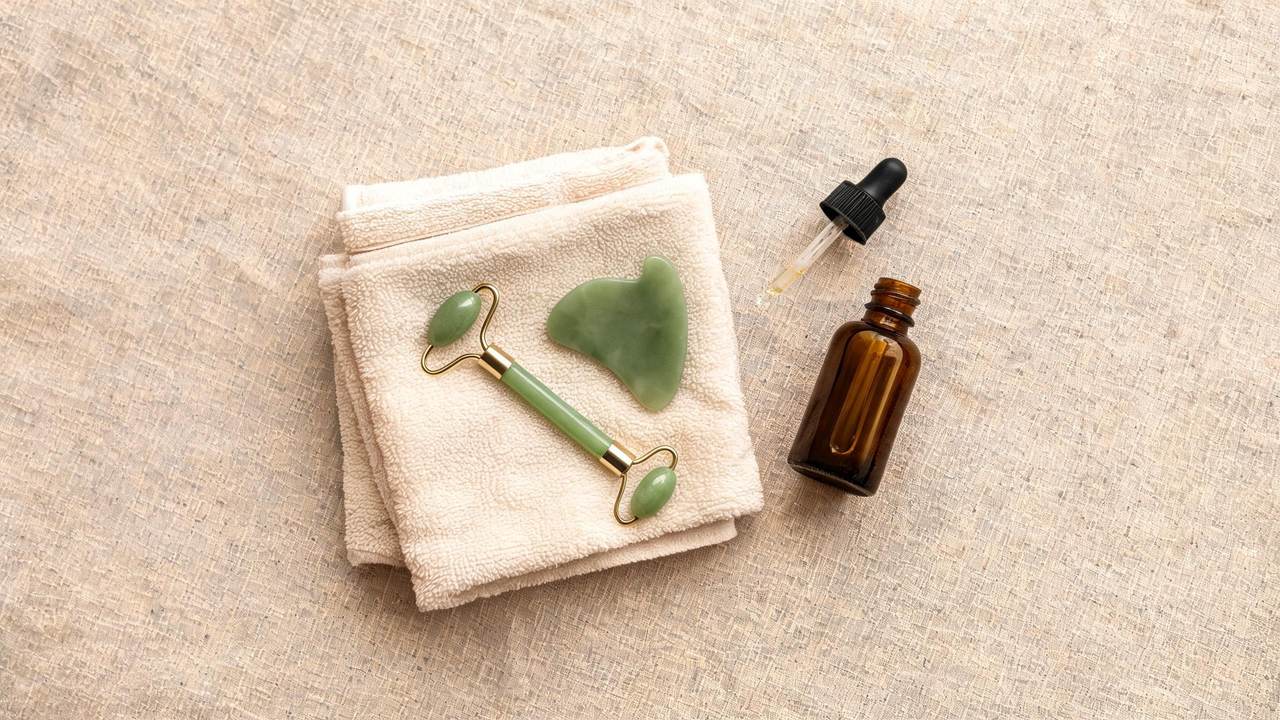
These five techniques can be added to your existing routine without any additional tools or time.
Why Facial Massage Works
Lymphatic drainage: The lymphatic system removes waste and excess fluid from tissue. Unlike the circulatory system, it has no central pump — it relies on movement. Gentle massage helps move lymph fluid away from the face, which can reduce the look of puffiness.
Circulation: Improved local blood flow delivers oxygen and nutrients to skin cells and contributes to the healthy-looking flush associated with well-cared-for skin.
Product absorption: Pressing and patting during skincare can improve how products settle in compared with passive application.
Muscle relaxation: The muscles of the face hold tension — particularly around the jaw, forehead, and eyes. Releasing this tension through massage has a subtle but real effect on appearance. (The mechanical stimulation of massage is also the mechanism behind evidence that scalp massage can increase hair thickness over time.[2])
A gentle approach also protects the skin barrier: less mechanical friction means less irritation and disruption of the outer skin layers.[1]
Technique 1: The Basic Press (for all product application)
Instead of applying products with a rubbing motion, use a pressing technique:
- Pour product into palms and rub hands together lightly to warm
- Press palms flat against the face (cheeks, forehead, chin)
- Lift the hands and re-press — don't slide
This improves absorption and reduces mechanical friction on the skin barrier.
Technique 2: Lymph Drainage Press (for puffiness)
Apply after cleansing, before toner:
- Place fingertips at the center of your forehead
- Press firmly and slide outward toward the temples
- From the temples, press gently downward toward the ear
- From the ear, press down the neck toward the collarbone
This traces the lymph drainage pathway from face to the lymph nodes at the neck. Duration: 30–60 seconds.
Technique 3: The "Pinch and Roll" (for tone)
Applied during your essence or serum step:
- Pinch skin very lightly between thumb and forefinger
- Roll gently — don't pull
- Work across the cheeks, jawline, and forehead
Light pinching stimulates circulation and provides gentle mechanical stimulation. Keep it light — this should never hurt or leave marks.
Technique 4: Pressure-Point Eye Technique (for puffiness and tired eyes)
Applied during the eye-cream step:
- Use your ring fingers (the lightest touch of all fingers)
- Start at the inner corner of the eye and press gently for 2–3 seconds
- Move to the mid-brow and press gently
- Move to the outer corner and press gently
- Move to the under-eye center and press gently
- Complete the orbital circuit back to the inner corner
- Repeat 3 times
Never drag the eye area — the skin here is the thinnest on the face. Tapping and pressing only.
Technique 5: The Jawline Contour (for a defined look)
Applied during the moisturizer step:
- Make a loose fist and place your knuckles at the chin point
- Press and glide from the chin to the earlobe along the jawline
- Repeat on both sides 5–10 times
Focusing lymph drainage along the jawline reduces the puffiness that can obscure jaw definition.
Bottom Line
Korean facial massage isn't a separate step — it's a technique layered into existing routine steps. The press-instead-of-rub approach requires no additional time; the lymph drainage circuit takes about 60 seconds. Start with the basic press for all your product application, and you'll likely notice improved absorption and reduced puffiness within the first week.
This article reflects current dermatological consensus and is not a substitute for personalized advice from a licensed dermatologist.