Korean Nighttime Skincare Routine: Repair While You Sleep
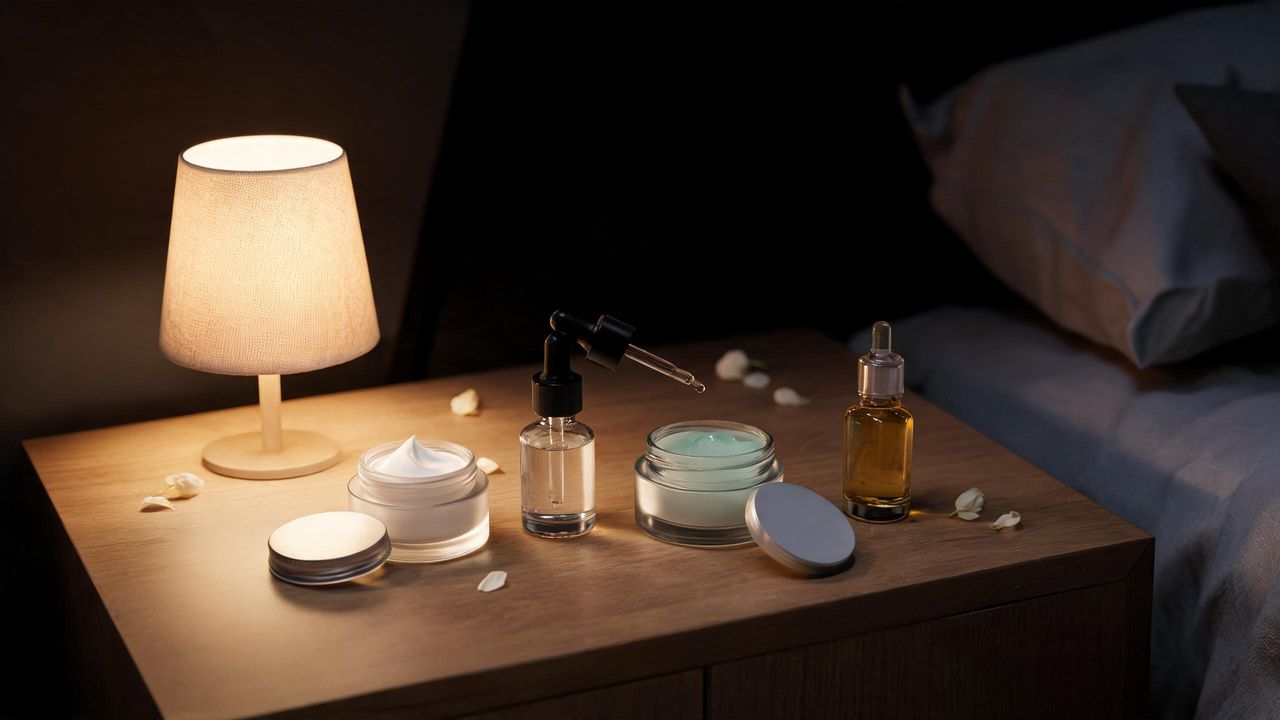
Korean Nighttime Skincare Routine: Make Repair Work Overnight
Skin follows a circadian rhythm. At night, cell division and DNA-repair activity increase, with mitosis in the epidermis tending to peak around midnight, while daytime skin is biased toward barrier defense and protection from UV [1]. Blood flow to the skin rises overnight, too. This is the window your PM routine is designed to support.
Here's how to build a nighttime routine that actually uses this window effectively.
Why Nighttime Skincare Works Well
- A repair-oriented phase: At night the skin's clock shifts toward proliferation and repair rather than daytime defense [1]
- No UV interference: Photosensitive ingredients (retinol, AHAs) can be applied without competing with sun exposure
- No environmental exposure: Products sit on skin without contending with UV and outdoor pollution
- Uninterrupted contact: Several hours of sleep give occlusives and actives time to work
The Complete PM Routine
Phase 1: Cleansing (about 5 minutes)
Step 1: Oil Cleanser The most underrated PM step. Sunscreen and sebum are oil-based, so water-based cleansers don't fully remove them. Massage oil cleanser for about 60 seconds on dry skin, then emulsify with water until milky and rinse.
Step 2: Low-pH Foam or Cream Cleanser Removes remaining residue while protecting the skin's acidic surface pH and barrier [2]. For dry skin, a cream cleanser; for oily skin, a gentle foam. Pat — don't rub — dry with a clean towel.
Phase 2: Treatment (3–5 minutes)
Step 3: Toner Apply within about 60 seconds of cleansing while skin is slightly damp. Press gently — pressing rather than rubbing is kinder to the barrier.
Step 4: Essence A high-value layer for overnight care. Fermented essences (bifida ferment lysate, galactomyces) are popular for supporting barrier comfort and adding antioxidant activity.
Step 5: Treatment Serum — the core of the PM routine Choose based on your primary concern:
- Anti-aging: Retinol/retinoid (start low, build slowly) — retinoids have strong evidence for wrinkles and photoaging [3]
- Brightening: Niacinamide (around 10%) or tranexamic acid [4]
- Hydration: Peptide or hyaluronic acid complex
- Acne: Retinoid or salicylic acid-based serum [5]
Phase 3: Sealing (about 2 minutes)
Step 6: Eye Cream Apply with your ring finger (lightest pressure) in a tapping motion around the orbital bone. Don't drag the skin.
Step 7: Moisturizer Richer than your daytime formula. Ceramides, peptides, and shea butter are appropriate here; ceramides help restore the barrier and reduce water loss [6].
Step 8: Sleeping Mask (2–3x per week) Applied as the final occlusive layer — for example LANEIGE Water Sleeping Mask, Belif True Cream Aqua Bomb, or Sulwhasoo Overnight Mask. Leave on and rinse in the morning.
Step 9: Facial Oil (optional, dry skin) 1–3 drops pressed in after moisturizer. Rosehip, squalane (non-comedogenic, skin-identical), or marula.
The Retinol Starter Protocol (For PM Routines)
If you're new to retinoids — among the most evidence-backed PM actives for most adults [3]:
- Week 1–2: Apply every third night
- Week 3–4: Every other night
- Month 2+: Every night if tolerated
Always follow with moisturizer. If irritation occurs, reduce frequency. Use SPF every morning without exception — retinoids can increase photosensitivity.
What to Skip in PM
- Vitamin C (better in the AM, where its antioxidant effect complements sunscreen against daytime UV) [7]
- SPF (AM only)
- Nightly sheet masks (unnecessary; 2–3x per week is plenty)
Bottom Line
The PM routine is where you do the real work. Double cleanse (no shortcuts), apply your treatment serum (a retinoid or niacinamide), seal with a ceramide cream, and add a sleeping mask or oil 2–3 nights per week. That's the protocol. The rest is optional.
This article reflects current dermatological consensus and is not a substitute for personalized advice from a licensed dermatologist.