Korean Straight Brows vs Arched Brows: Why Koreans Prefer the Soft Horizontal Look
Korean Straight Brows: Why They Work and How to Get Them
The difference between Korean and Western brow aesthetics is stark. Western trends have long favored a high arch — dramatic, structured, and defined. Korean brow preferences run in the opposite direction: soft, horizontal, slightly straighter, and natural-looking.
The Korean straight brow creates a different facial impression: younger-looking, more approachable, and softer overall. A lower, softer brow can also visually increase the apparent distance between the brow and the eye, which tends to make the eyes look larger.
What "Korean Straight Brows" Actually Means
"Straight" doesn't mean completely horizontal — it means minimal or barely-there arch. The brow follows the natural bone structure without a pronounced peak in the middle-outer third.
Key characteristics:
- Tail sits slightly lower than (or level with) the head of the brow
- Minimal arch — a gentle curve at most
- Soft edges — no sharp or heavily defined brow lines
- Natural color — matching or slightly lighter than your hair
Why This Look Works for Many Faces
The arched Western brow emphasizes the horizontal mid-face and can create a more mature or severe expression. The straighter Korean brow:
- Softens angular features
- Makes eyes appear more rounded and larger
- Gives a more youthful, "at rest" facial expression
- Works with natural growth patterns for many faces where the brow tail naturally sits lower [1]
How to Achieve Korean Straight Brows
Step 1: Map Your Natural Brow Shape
Picture a straight horizontal line from the head of your brow to the tail. This is your target baseline — you'll fill below and along this line rather than following your natural arch upward.
Step 2: Trim Any Hairs That Fall Above the Line
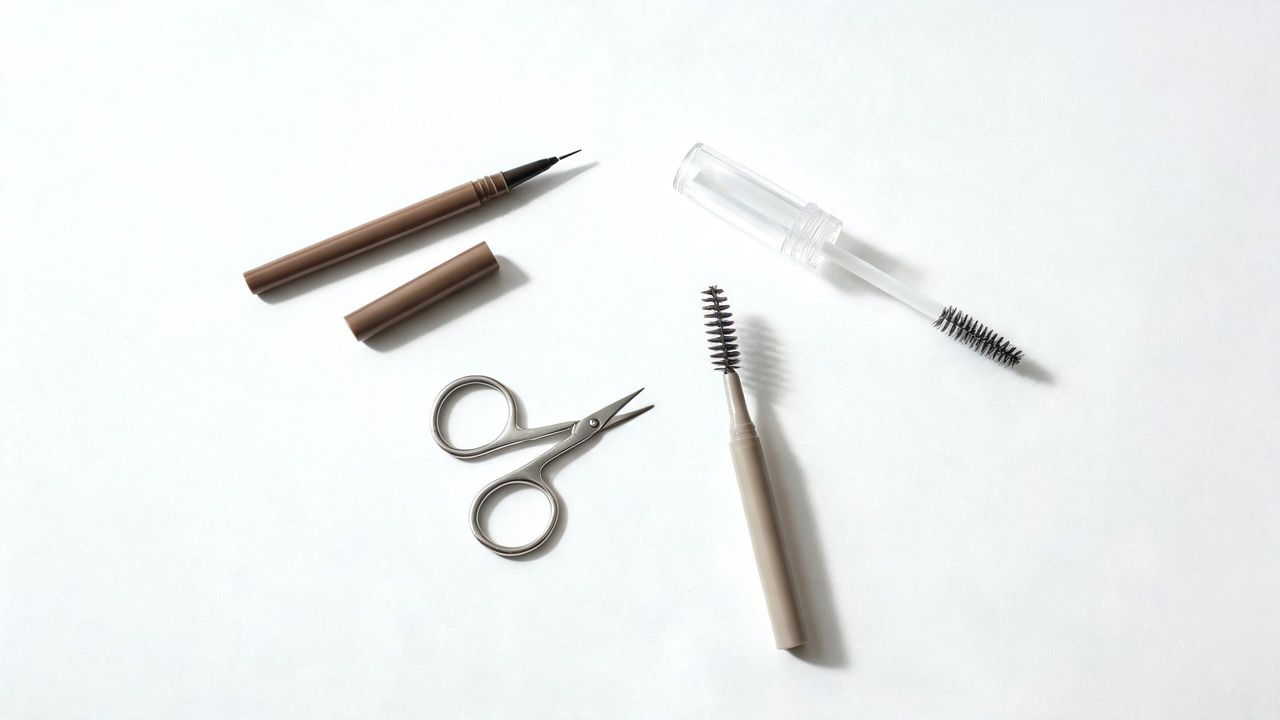
Use small brow scissors to trim hairs on the top of the arch that add height. Don't remove hairs — just trim them to reduce upward fullness.
Step 3: Fill In (the Korean Technique)
Using a fine-tipped brow pencil in a shade matching or slightly lighter than your brows:
- Fill sparse areas in the inner two-thirds with short, hair-like strokes
- Fill the tail with a slightly firmer stroke
- Keep the tail level with or slightly lower than the head of the brow
Key difference from Western technique: Don't follow the highest point of your arch upward. Keep the fill horizontal.
Step 4: Soften with a Spoolie
Brush through with a spoolie immediately after penciling to soften all lines. Korean brows should never look drawn-on.
Step 5: Set with Brow Gel
A clear or tinted brow gel, brushed up and outward (not straight up like Western fluffy brows), keeps the shape and adds dimension.
Korean Brow Products
- Etude Drawing Brow — ultra-thin micro-tip, excellent for hair-like strokes
- Clio Tinted Tattoo Kill Brow — long-lasting, waterproof
- Innisfree Auto Eyebrow Pencil — retractable, precise tip
- 3CE Brow Pencil — a popular soft-shade formula
Bottom Line
Korean straight brows are a specific technique, not just a "less arched" version of your current brows. The key is horizontal fill (following the eye-socket line, not the arch peak), trimmed high hairs, and a soft, brushed-through finish. If you naturally have lower-arched brows, this style requires minimal change. If you have strong natural arches, it's a subtle rethink of your fill direction.
This article reflects current dermatological consensus and is not a substitute for personalized advice from a licensed dermatologist.