Korean Sunscreen Guide: How to Apply SPF the Right Way
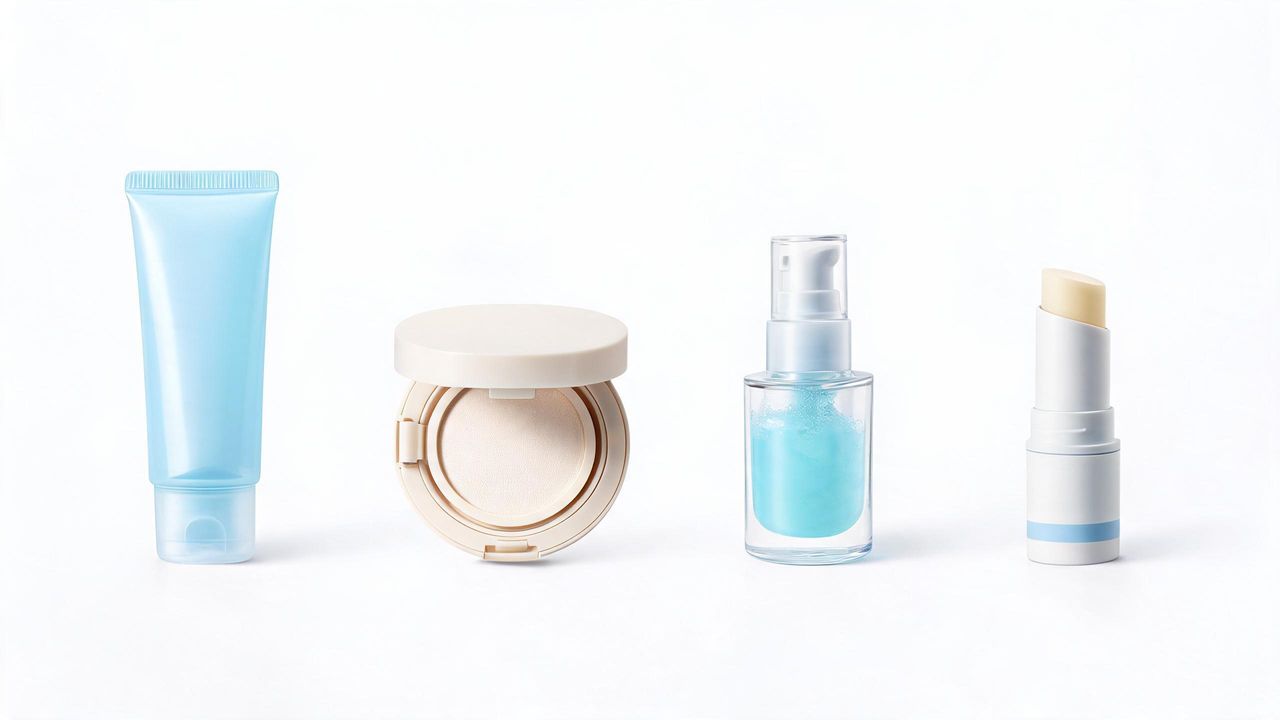
Korean Sunscreen: How to Apply It Right (Most People Don't)
Sunscreen is the most impactful anti-aging product you own — UV exposure drives the large majority of visible skin aging over a lifetime [1]. It's also the most commonly misapplied. Research consistently shows people apply far less than the amount needed to reach the labeled SPF.
Here's the Korean approach to SPF — from a beauty culture that arguably takes sun protection more seriously than anyone.
Why Korean Sunscreen Culture Is Different
Korean beauty culture treats sunscreen as a baseline non-negotiable, not an afterthought. SPF 50+ PA++++ is standard (the "PA" rating indicates UVA protection — used in Korea and Japan and not common in US labeling). Many people reapply SPF through the day, keep cushion compacts for top-ups, and can choose from an entire category of lightweight watery sunscreens designed to make reapplication easy.
The payoff is real: consistent broad-spectrum protection is one of the best-supported ways to reduce photoaging [1].
How Much SPF to Apply
Dermatological guidelines generally recommend about 1/4 teaspoon (roughly 1.25 mL) for the face, or use the two-finger rule as a practical guide [2].
Most people apply only a fraction of this. Under-applying meaningfully lowers the real-world protection you get, so a nominally high SPF can perform far below its label when applied thinly [2].
The two-finger rule: squeeze product along the length of your index and middle finger, applied together — roughly one full face dose.
Application Order (Non-Negotiable)
- Finish your skincare routine (moisturizer is the last step before SPF)
- Wait 1–2 minutes for moisturizer to absorb
- Apply SPF generously using the two-finger rule
- Wait 2–3 minutes before applying makeup
- Don't rub — pat and press sunscreen in; rubbing can pill the formula
SPF is always the last skincare step. Nothing goes over it except makeup.
Korean SPF Formats and When to Use Each
Watery essence SPF (e.g., Biore UV Aqua Rich): Best for daily wear, minimal white cast, works under makeup. Reapply after swimming or heavy sweating if not water-resistant.
Gel SPF (e.g., Beauty of Joseon Relief Sun): Lightweight, matte-leaning finish, good for oily skin and easy to layer.
Cushion SPF: Best for reapplication through the day without disturbing makeup.
Cream SPF: Best for dry skin and a more emollient, occlusive feel.
Stick SPF: Ideal for targeted reapplication — nose, cheekbones, hairline — and touch-ups over makeup.
Reapplication: The Step Everyone Skips
SPF protection degrades with UV exposure, sweat, and sebum, so it isn't constant through the day [2].
A practical reapplication guide:
- Indoors near a sunny window: consider a top-up, since UVA penetrates glass
- Outdoors in shade: every 2–3 hours
- Outdoors in direct sun: at least every 2 hours, and after swimming or heavy sweating [2]
To reapply over makeup, use a cushion compact, an SPF spray, or a powder SPF (apply enough for it to count).
The Difference Between Korean and Western Sunscreen Filters
Korean and Japanese sunscreens often use UV filters that aren't currently approved in the US:
- Tinosorb S — broad-spectrum, photostable
- Tinosorb M — broad-spectrum, strong UVA
- Uvinul A Plus — UVA-specific, photostable
- Mexoryl SX/XL (in some formulas)
These filters are approved in regions such as the EU, Korea, Japan, and Australia, having gone through different regulatory pathways. Newer filters are a big reason many Korean sunscreens feel light and elegant. Importing Korean SPF for personal use is generally permitted in the US.
Bottom Line
Apply more than you think you need, apply it last, and reapply. Those three changes make your SPF actually perform near its labeled protection [2]. The Korean cushion compact exists specifically for easy, non-disruptive reapplication — one of the most practical SPF innovations of the last decade.
This article reflects current dermatological consensus and is not a substitute for personalized advice from a licensed dermatologist.