Korean Sunscreen and Makeup: How to Layer SPF Without Ruining Your Base
Korean Sunscreen and Makeup: The No-Pill, No-Patch Method
The #1 makeup complaint about sunscreen: pilling, patching, and a base that looks uneven by midday. The Korean approach to this problem is partly product selection and partly technique — and getting both right largely solves the issue.
Why Pilling Happens
Pilling (little product balls forming on your skin) tends to happen when:
- Sunscreen hasn't fully absorbed before the next product is applied
- A silicone-heavy moisturizer meets a different-base sunscreen, creating incompatibility
- Too much product is applied in total
The solution: proper absorption time plus compatible formulas.
The Correct Layering Order
- Skincare routine (toner, serum)
- Moisturizer — let it absorb 2–3 minutes
- Sunscreen — let it absorb 3–5 minutes (the step most people rush)
- Primer (optional) — only if needed for your skin type
- Foundation / BB cream / skin tint
The clock: Rushing SPF application is the most common cause of pilling. A few minutes between SPF and base makes a real difference. Importantly, sunscreen only performs at its rated level when applied at the tested amount — roughly two finger-lengths for the face and neck — and reapplied through the day.[1]
Choosing Compatible Products
Korean lightweight sunscreens (such as Bioré UV Aqua Rich or Beauty of Joseon Relief Sun) are formulated to layer easily under makeup. They absorb quickly and don't leave a heavy film.
Harder to layer under makeup:
- Thick, cream SPF formulas intended for outdoor/beach use (these sit on the skin surface and can prevent makeup adhesion)
- Alcohol-heavy SPF mists (can disturb makeup or prevent adhesion)
- SPF sticks as a primary application (great for reapplication, less ideal as a base layer)
Reapplication Over Makeup
Reapplying SPF over makeup without disturbing it:
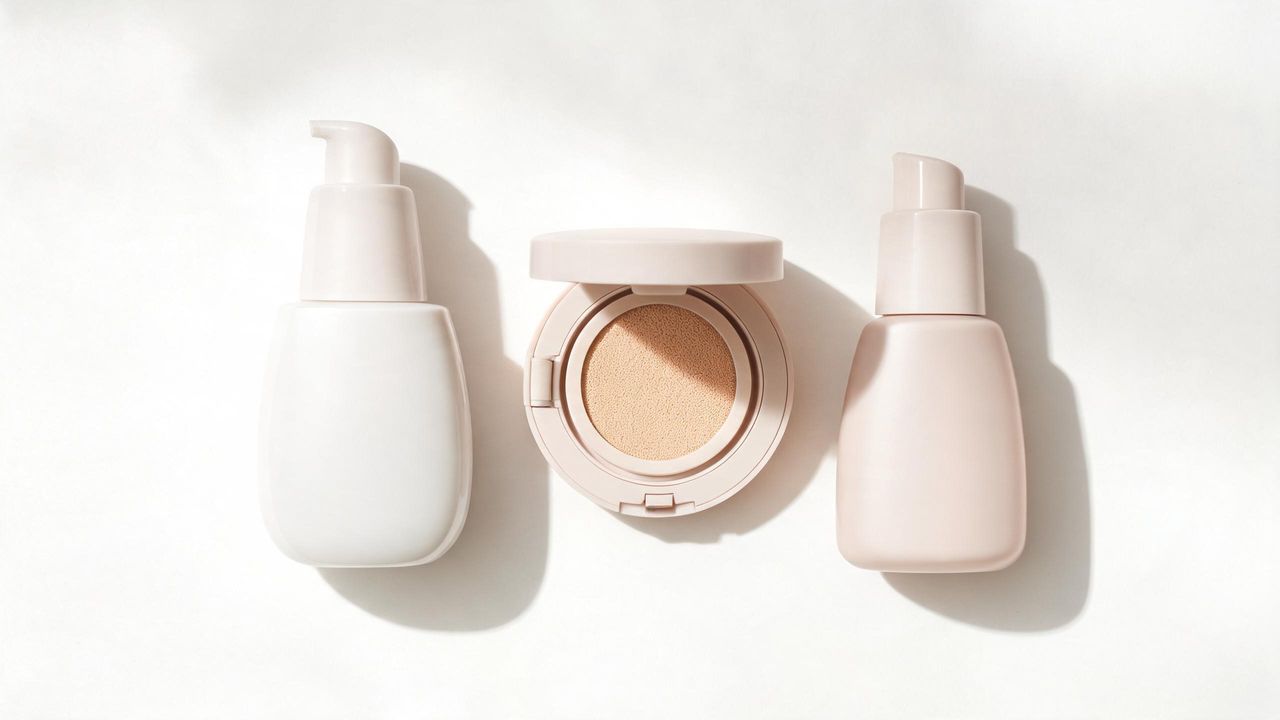
Option 1: Cushion compact with SPF — the most elegant solution. The cushion sponge deposits product without disrupting the base. Blot gently.
Option 2: SPF setting spray — mist over the face and let it settle. Because sprays are easy to under-apply, use a generous, even pass and don't rely on them as your only protection.[1]
Option 3: SPF powder — mineral-based powders with SPF can be applied over makeup with a brush. In practice these are best treated as a top-up rather than a full substitute for a properly applied cream sunscreen, since achieving the labeled SPF from powder alone is difficult.[1][2]
The "SPF in Makeup Is Enough" Myth
Many foundations and BB creams carry SPF claims. These generally should not replace standalone sunscreen because:
- You'd need to apply several times the normal foundation amount to reach the labeled SPF[1][2]
- Coverage from makeup is often uneven (foundation is applied lightly and selectively, whereas sunscreen must be applied generously and evenly)
- The protection can be patchy wherever makeup is thin
Apply standalone sunscreen. Let it absorb. Then apply makeup.
Bottom Line
The Korean solution to sunscreen-under-makeup is: a lightweight SPF formula, a few minutes of absorption time, and a light hand with base makeup applied over it. For reapplication, a cushion compact with SPF is the most practical and makeup-safe method — and dedicated sunscreen, applied generously, remains the foundation of the whole routine.[1]
This article reflects current dermatological consensus and is not a substitute for personalized advice from a licensed dermatologist.