Korean vs Western Makeup: 5 Key Technique Differences
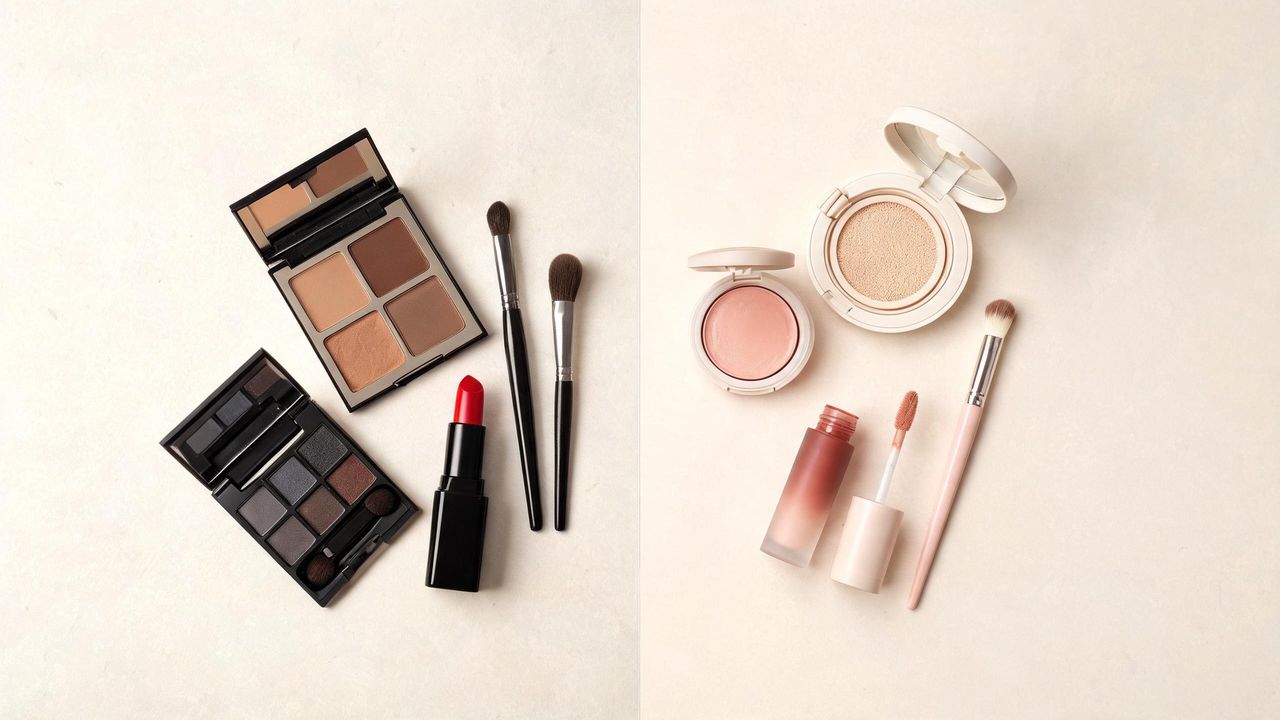
Korean vs. Western Makeup: 5 Real Differences in Technique
The visual difference between Korean and Western makeup is obvious. The technical difference is less discussed — but understanding it helps you adapt techniques for your own look, regardless of which aesthetic you lean toward.
1. Skin Preparation: Skincare vs. Primer
Western approach: Skincare is brief. The focus is primer — blur pores, extend wear, create a smooth canvas.
Korean approach: The skincare routine is the prep. Multiple hydrating layers build a smooth, plump surface before any makeup touches the face. Primers are used selectively, if at all.
Practical implication: Korean makeup technique assumes well-hydrated base skin. A well-functioning skin barrier holds water and gives makeup a smoother canvas, which is why techniques that rely on dewy skin (glass skin, gradient lip) fall flat on a primer-heavy, dehydrated base.[1]
2. Base Coverage: Medium-to-Full vs. Light-to-Medium
Western: Full-coverage foundation is common for many occasions, matched precisely to skin tone.
Korean: Light-to-medium coverage is standard. Imperfections are covered but skin texture is allowed to show through. A BB cream, skin tint, or cushion is often used instead of foundation.
Practical implication: Korean base techniques (fingertip application, pressing motions) are optimized for lighter products that blend more transparently.
3. Contouring: Chiseled vs. Minimal
Western: Contouring is central — shadows under cheekbones, on temples, jawline, and sides of the nose sculpt structure.
Korean: Contouring is minimal to absent. The focus is luminosity and flush rather than shadow and structure. Blush often does the work contour would.
Practical implication: The dewy, youthful Korean aesthetic works against heavy matte shading. For a Korean-influenced look, go lighter on contour and add blush instead.
4. Eye Makeup: Dramatic Smoky vs. Youthful Definition
Western: Strong eye focus — smoky eye, cut crease, and bold liner are core techniques. The eye is the feature.
Korean: Eyes are defined but not dramatically. The emphasis is on making eyes look larger and more youthful rather than more intense. Aegyo sal, inner-corner highlight, and soft lower-lash definition are favored over heavy eyeshadow.
Practical implication: Korean eye techniques open up the eye; Western techniques deepen and intensify it. Both are valid but create entirely different results.
5. Lip: Bold and Defined vs. Soft and Gradient
Western: Lined, fully-colored, precisely applied lips. Bold shades (red, berry, deep nude) are common, and the lip border is typically followed.
Korean: Unlined or gradient. Color concentrates at the center; borders are soft or intentionally blurred. Shades lean wearable (rose, peach, soft berry) over statement.
Practical implication: The gradient and blurred lip techniques call for specific products (lip tints over traditional lipsticks) and a different application approach (finger over brush).
A Shared Foundation: Sun Protection
One thing both traditions increasingly agree on: whatever base you use, sunscreen belongs underneath it. Ultraviolet exposure is the dominant driver of visible facial aging — one widely cited analysis attributed roughly 80% of visible facial aging signs to sun exposure — so a dedicated broad-spectrum sunscreen is the most consequential "makeup" step of all.[2]
Bottom Line
Neither approach is superior — they're built for different aesthetic goals. Western makeup traditionally emphasizes structure, drama, and definition; Korean makeup emphasizes skin quality, youthfulness, and "barely there" enhancement. Understanding the technical differences lets you mix and match — the dewy base from Korean skincare, the lip gradient from K-beauty, and a stronger eye from Western technique.
This article reflects current dermatological consensus and is not a substitute for personalized advice from a licensed dermatologist.