Rice Water for Skin: Ancient Practice, Modern Evidence
Rice Water for Skin: Ancient Practice, Modern Evidence
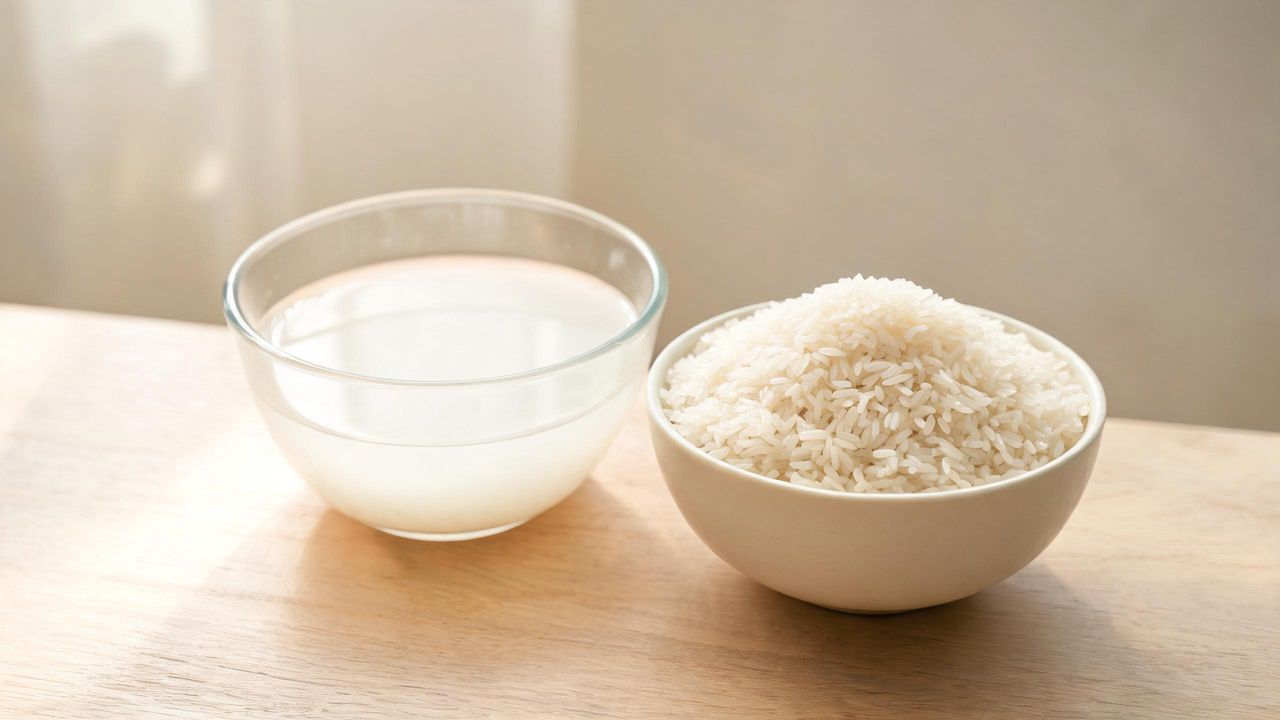
Rice water — the starchy water left after soaking or cooking rice — has been used in Korean and Japanese skincare for centuries. It was historically valued as a skin-softening and brightening rinse, and Korean tradition often fermented it for added benefit.
Does it hold up to modern scrutiny? Mostly, with some caveats.
What Rice Water Contains
Rice water (particularly fermented rice water) contains a mix of skin-relevant compounds:
- Inositol — a carbohydrate associated with surface smoothing and conditioning
- Ferulic acid — an antioxidant that can also help stabilize vitamins C and E [2]
- Vitamins B1, B2, B3 (niacinamide), E — with various skin benefits [1]
- Oryzanol — an antioxidant with some UV-absorptive properties
- Allantoin — soothing and skin-conditioning
- Amino acids — support hydration
- Starch — mildly smoothing and light film-forming
The Evidence
Skin smoothing: Inositol has been studied for its ability to condition hair and skin surfaces, and the fermentation of rice byproducts is the basis of well-known ingredients such as galactomyces ferment filtrate. The smoothing effect is reasonably well supported.
Brightening: The niacinamide and ferulic acid content provide a plausible mechanism [1][2]. However, the evidence is largely mechanism-based — the amounts present in ordinary rice water may not be high enough for dramatic results, so temper expectations.
Antioxidant protection: Ferulic acid and oryzanol both provide antioxidant activity, which can complement (not replace) sunscreen [2].
Surface conditioning: Users consistently report smoother-feeling skin, consistent with the starch and inositol content and light film-forming effect [3].
Limitation: Concentrations of active compounds in DIY rice water vary enormously depending on rice type, ratio, and preparation method. Commercial products with standardized rice extracts are far more consistent.
DIY Rice Water vs. Commercial Products
DIY fermented rice water: Cheap, traditional, variable results. A common method is to soak or ferment rice for 24–48 hours, strain, refrigerate, and use as a toner within about a week. Patch test first, and discard if it smells off.
Commercial rice extract products: Standardized concentrations, more consistent results, longer shelf life. Products such as the Beauty of Joseon Glow Serum and various rice-based toners use standardized rice extract.
The commercial approach wins on consistency and safety; DIY wins on cost and tradition.
Bottom Line
Rice water isn't marketing mythology — the active compounds are real and their mechanisms are plausible. The smoothing and antioxidant effects are reasonably substantiated, while strong brightening claims run ahead of the current evidence. For a standardized, consistent dose, a commercial rice-extract product is more reliable than DIY. For those who prefer traditional methods, fermented rice water used as a toner is generally safe and reasonably effective when prepared and stored carefully.
This article reflects current dermatological consensus and is not a substitute for personalized advice from a licensed dermatologist.