Korean BB Cream vs CC Cream: Which Do You Actually Need?
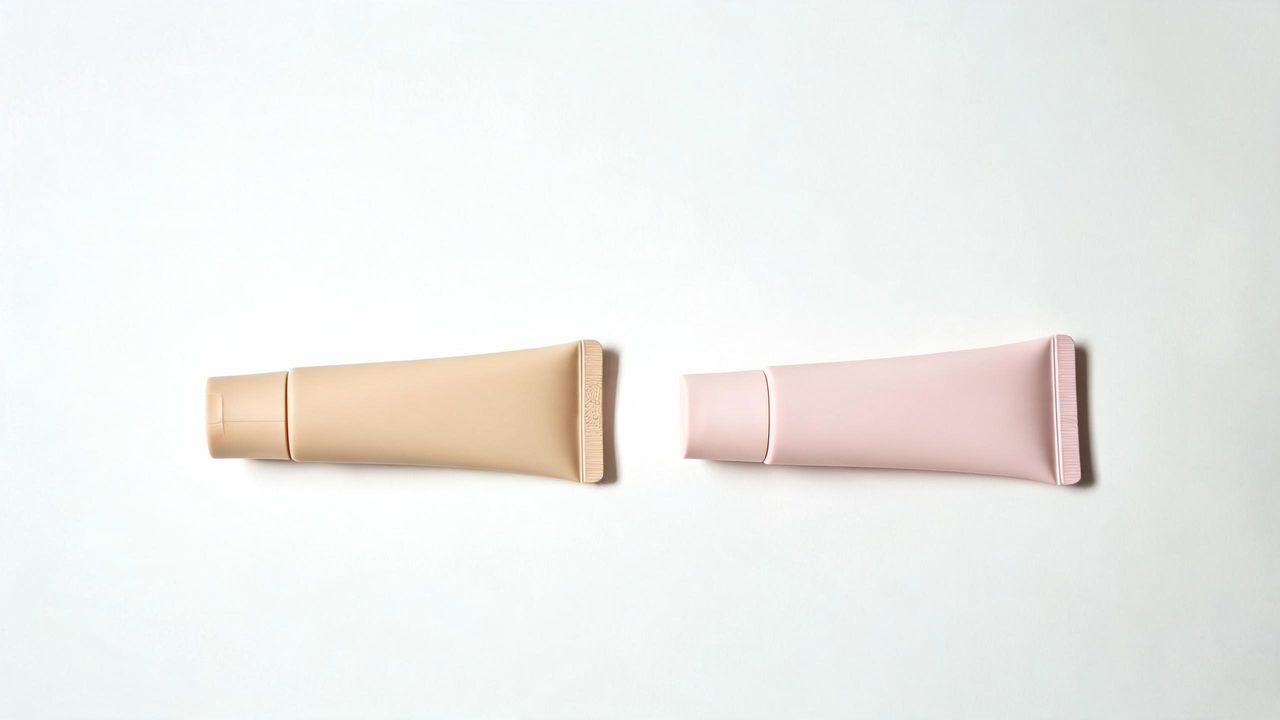
Korean BB Cream vs. CC Cream: The Clear Difference
BB cream and CC cream are K-beauty concepts that traveled globally but lost some of their distinctions along the way. Many products blur the line between them, and plenty of people use one when they'd be better served by the other.
BB Cream: What It Originally Was
BB stands for Blemish Balm. It was originally developed in Germany for use on skin recovering from dermatological procedures, then popularized in Korea as a hybrid product that combined:
- Light coverage (foundation-like)
- Skincare ingredients
- SPF protection
What it does well:
- Evens skin tone with light-to-medium coverage
- Combines hydration and SPF in one step
- Gives a natural, skin-like finish
Best for: Normal to dry skin with a reasonably even skin tone that wants a simplified routine. Less coverage than foundation; more than a tinted moisturizer.
Korean BB creams: Missha M Perfect Cover BB Cream (the original global hit), Dr. Jart+ Premium BB Beauty Balm, ETUDE Any Cushion BB.
CC Cream: What It Originally Was
CC stands for Color Correcting. It was designed to address specific tone concerns — redness, sallowness, dullness — before adding coverage. Typically:
- Lighter coverage than BB cream
- Color-correcting pigments (lavender for sallowness, green for redness)
- Skincare ingredients plus SPF
What it does well:
- Corrects specific tone issues (useful for redness-prone or dull-looking skin)
- Very natural, buildable finish
- Usually lighter in texture than BB cream
Best for: Oily skin (formulas are often lighter), skin with specific tone concerns, and anyone who wants the lightest possible coverage.
Which Should You Use?
| Concern | BB or CC? |
|---|---|
| Want light coverage + hydration | BB |
| Want to address redness/dullness | CC |
| Oily skin | CC (typically lighter) |
| Dry skin | BB (typically richer) |
| Travel / minimal routine | BB (higher coverage) |
| Under other base products | CC (lighter base layer) |
The Reality: Modern Products Blur the Lines
Many contemporary BB and CC creams have converged into the same category. If a product is labeled BB but is very light and color-correcting, it functions like a CC. Read the formula and texture description more closely than the label.
What to look for regardless of the BB/CC label:
- SPF 30+ if you intend to use it as sun protection — but remember that makeup SPF is difficult to apply at the amount needed to reach its rated level, so a standalone sunscreen underneath is still recommended[1]
- A shade range that matches your skin tone
- A finish that suits your skin type (matte/satin for oily; satin/dewy for dry)
- Skincare ingredients in the formula, such as niacinamide or humectants that support the skin barrier[2]
Bottom Line
BB cream is for coverage and hydration. CC cream is for tone-correction and a lighter finish. In practice the products overlap significantly — read the formula over the label. And whichever you choose, treat its SPF as a bonus rather than your primary sun protection; a dedicated sunscreen still belongs underneath.[1]
This article reflects current dermatological consensus and is not a substitute for personalized advice from a licensed dermatologist.